PROJECT OVERVIEW
Streamlining invoice financing for LATAM exporters
Client
Team
Tools
Timeline
THE CHALLENGE
Building trust in new fintech
Supply Pay helps produce exporters in Latin America get paid faster through invoice financing. But the initial MVP had key issues:
No design system — developers were building directly in code
Lacked the trust and polish expected from financial tools
I was brought in to deliver clarity, trust, and scalability - fast. My tasks:
Design a lending dashboard that feels familiar and reliable
Create a scalable style guide to support ongoing builds
THE FINAL SOLUTION
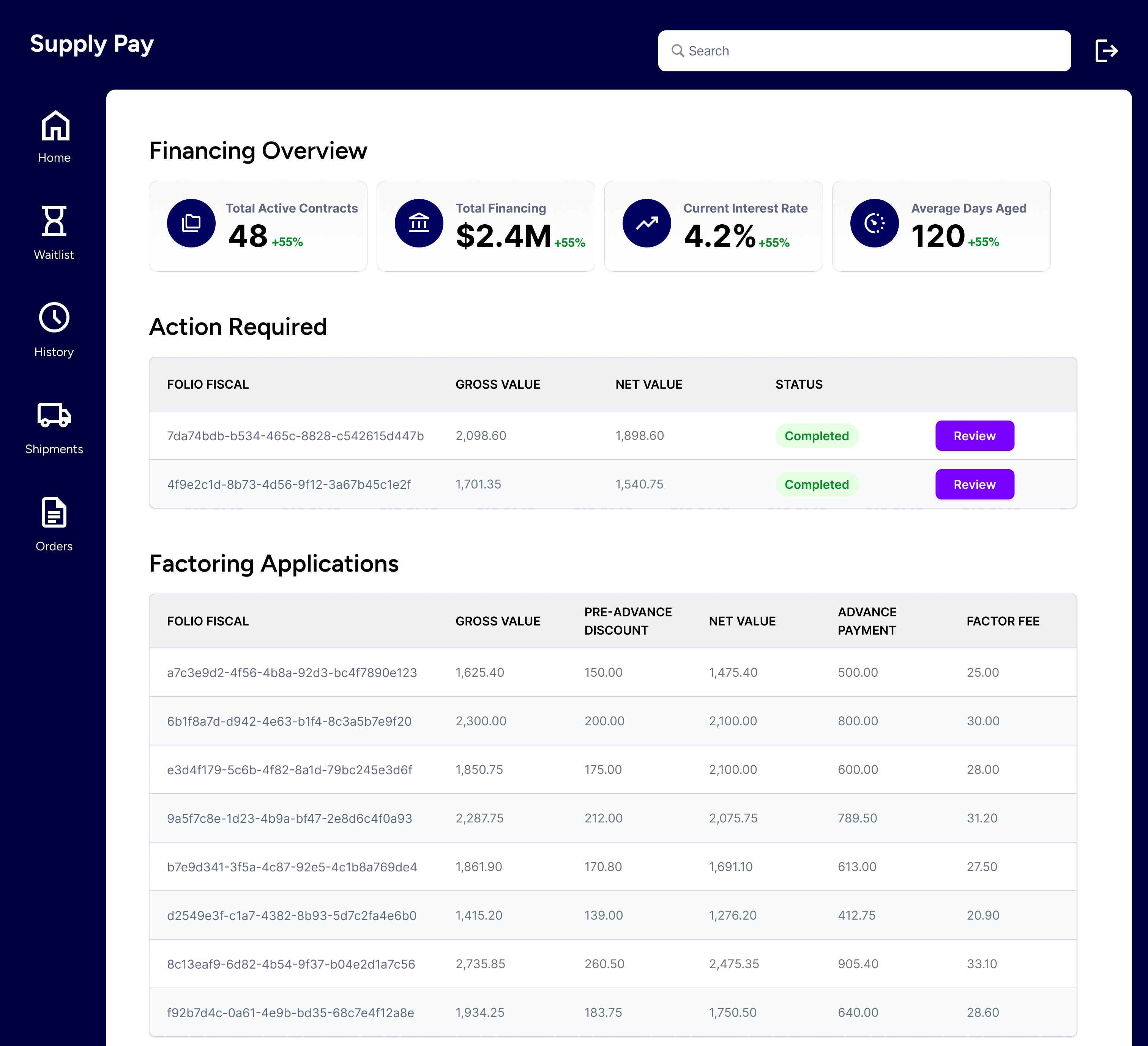
Upgraded dashboard
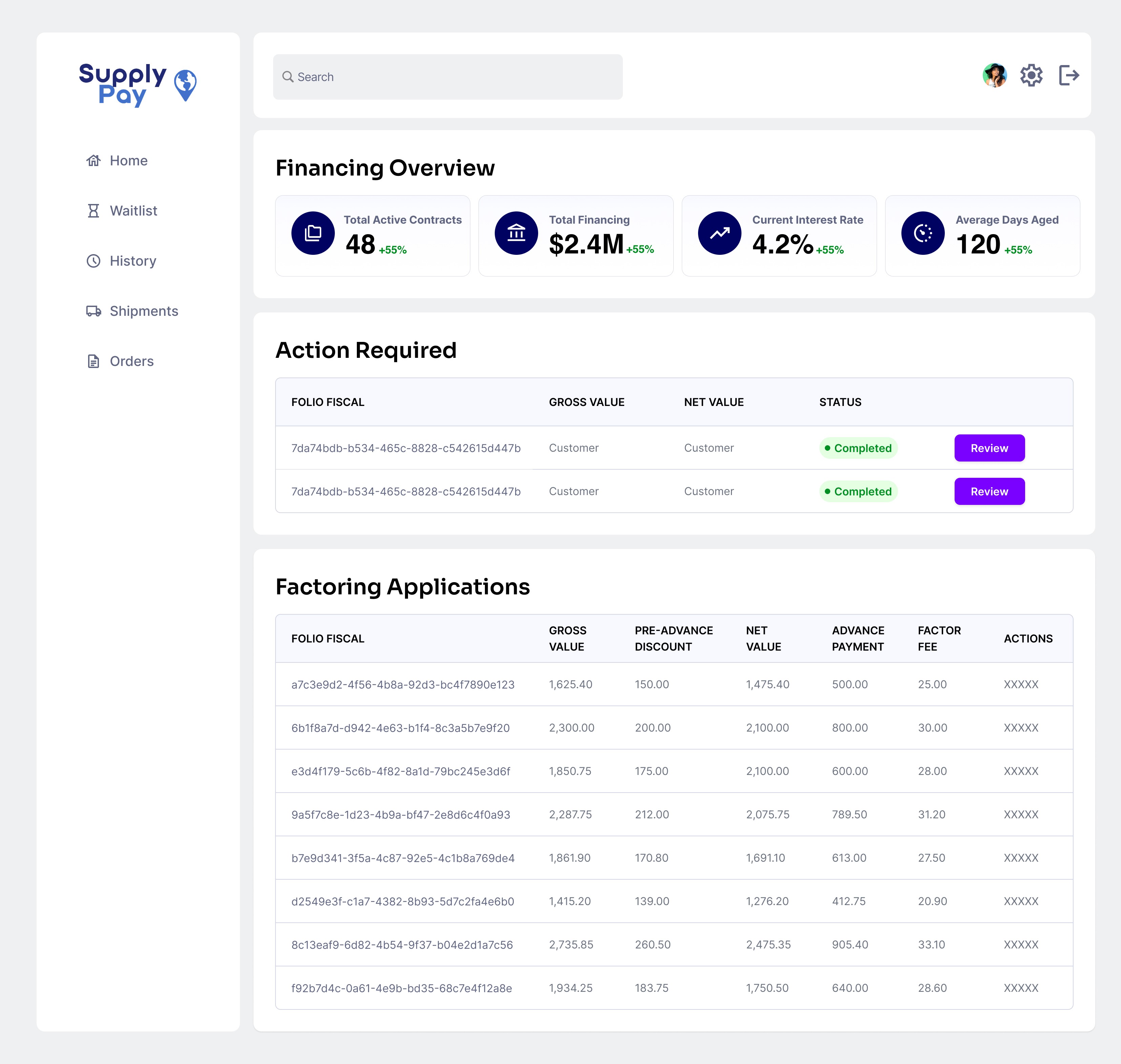
The new UI balanced modern fintech aesthetics with familiar dashboard patterns. Key features:
Invoice tracking and payment status updates
Account balance and history
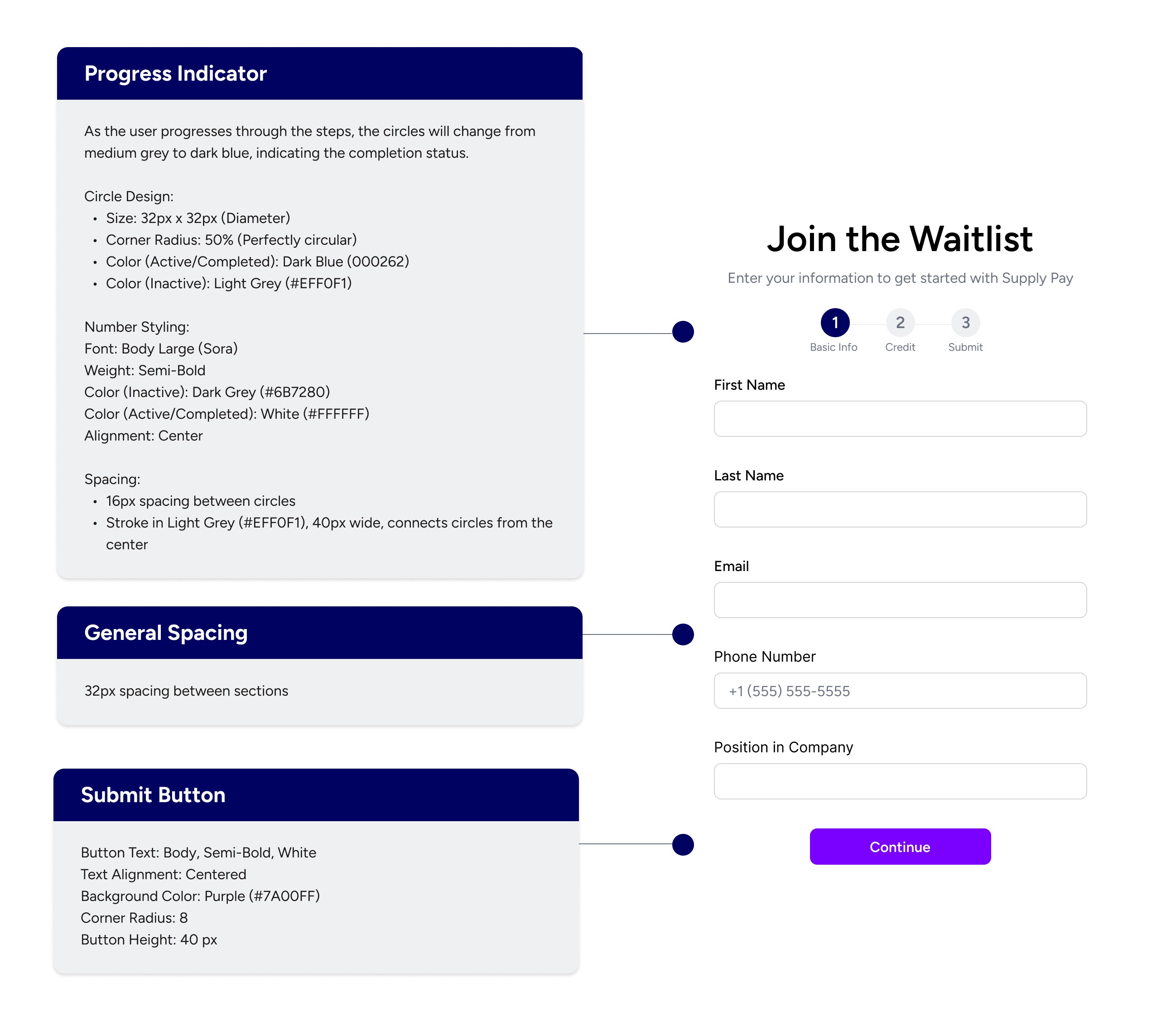
Progressive disclosure for application forms

ADDITIONAL DELIVERABLES
Visual style guide
To support future growth, I also delivered a lightweight brand book and style guide to ensure visual consistency across new features and marketing.
Instead of a full design system, we focused on practical foundations that developers could apply immediately.
MY APPROACH
No research? No problem.
With research cut from the scope due to time constraints, I turned to competitive analysis:
Looked at leading fintech brands in LATAM (e.g., Nubank, Ebanx) to understand regional design cues and color schemes
Audited dashboard UIs from tools like Slack and Google Calendar for interaction and layout patterns
My thinking?
Without interview data, this gave me a fast, informed way to design for trust and usability - drawing from patterns users already understand and fintech companies they recognize.
ESTABLISHING THE VISUAL DIRECTION
Color was a major debate…
CEO wanted red: bold and energetic
COO wanted blue: traditional and secure
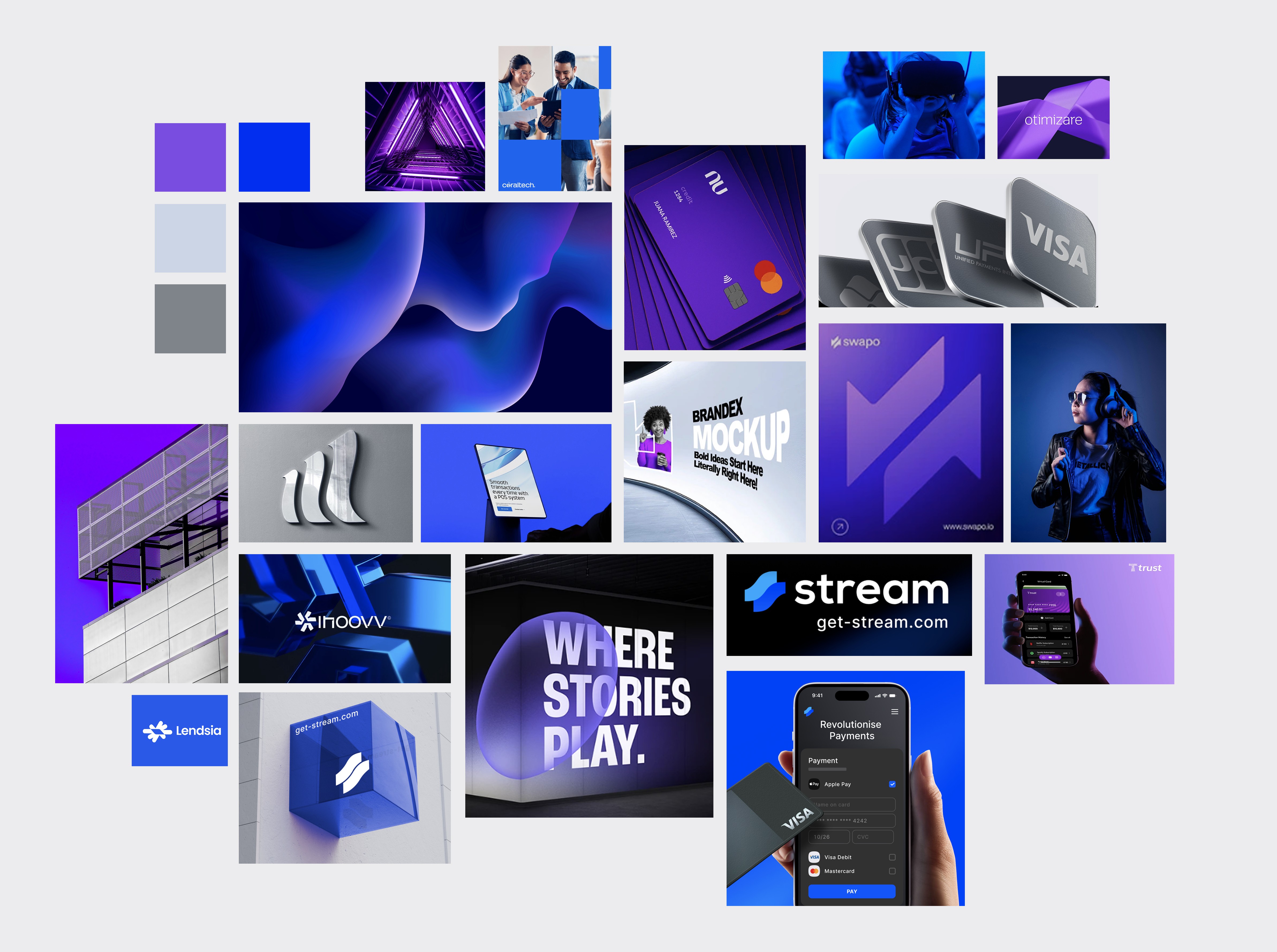
I proposed a deep navy base with vibrant purple accents, referencing Nubank’s success in LATAM.
My thinking?
Blue grounded the product in trust, while purple gave it a unique, modern identity exporters could connect with.
BUILDING THE UI
Iterations & feedback
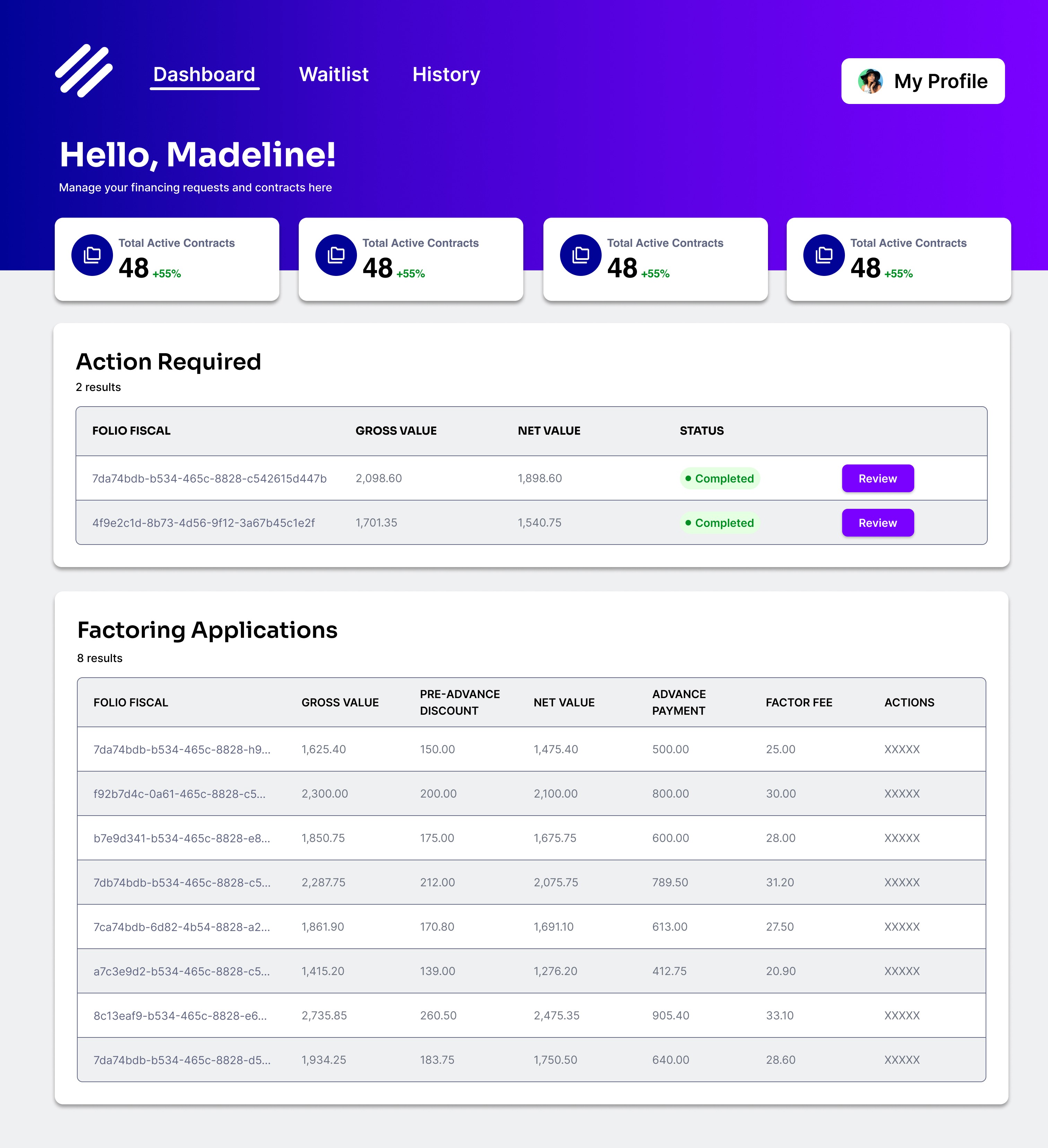
The dashboard evolved through three major iterations. I shared early drafts with both the CEO and lead developer to align on feasibility and visual direction.
How I adapted:
Experimented with different ways of applying branding
Tested alternative navigation menus with internal teams
Reprioritized key info based on business needs and developer feedback
RESULTS
Project impact
Faster development
No more designing in code from scratch.
Product cohesion
For the first time, clear guidelines unified the brand across product and marketing materials.
Designing for scale
Reusable components and color styles allows for scalable UI as features expand.
How my work has evolved
Cultural context beats color theory: Design choices must reflect regional preferences, not just aesthetics.
No research? Audit well: Competitive analysis is a fast, scrappy stand-in when timelines are tight.